Day #3: Sunday January 16th, 2011
TREC (San Pedro), Tuffy Reef, and Mexico Rock, Belize
Click here to see the full album of photos from today
Greetings from sunny Belize! It was quite warm and sunny here all day, so everyone had to be careful to avoid burning. Despite multiple applications of high-SPF sunscreen, most of us have our pink parts.
Our day started with breakfast at 8AM, then a short walk to the beach at 8:45 for beach cleanup:
Around 9:00AM, we boarded the Goliath, pausing to pose for a photo on the boat dock:
Our first stop was our research site, Tuffy reef. Our goal for today was to establish the research protocols that we will follow for the rest of the week. The students were divided into 4 teams (named after Belizian fauna: Team Tiger Shark, Team Lion Fish, Team Donkey Dung, and Team Slippery Dick) of 4 students each. We spent last night devising an overall research plan: to measure the number, size, and health of two species of coral in two reef habitats. Every group formulated their own hypotheses to test. Two groups were tasked with taking a census of purple sea fan coral, and two groups were tasked with brain coral. For each organism, one group took a shallow water census, and one a deep water census. The students worked hard to figure out the proper methodology and techniques:
We'll be meeting tonight to formalize our methods and to write the Methods section of the lab report (which is the big deliverable for this trip). Hopefully, by the end of tonight, our research plan will be set.
After Tuffy, we had our usual light lunch on the boat (egg salad sandwiches, and chips + warm bean dip) as we spent about an hour motoring to our next dive spot. This presented a good opportunity for the students to relax on board, get some sun, and watch dolphins at play in the waves and off the stern of the boat.
Can you believe they are getting credit for this? :-) At Mexico Rock, we had our longest snorkel so far. This unique habitat had many organisms we had not seen before, such as branching sponges and various anemones. We also ran into several Southern Sting Rays. It was really a great snorkel.
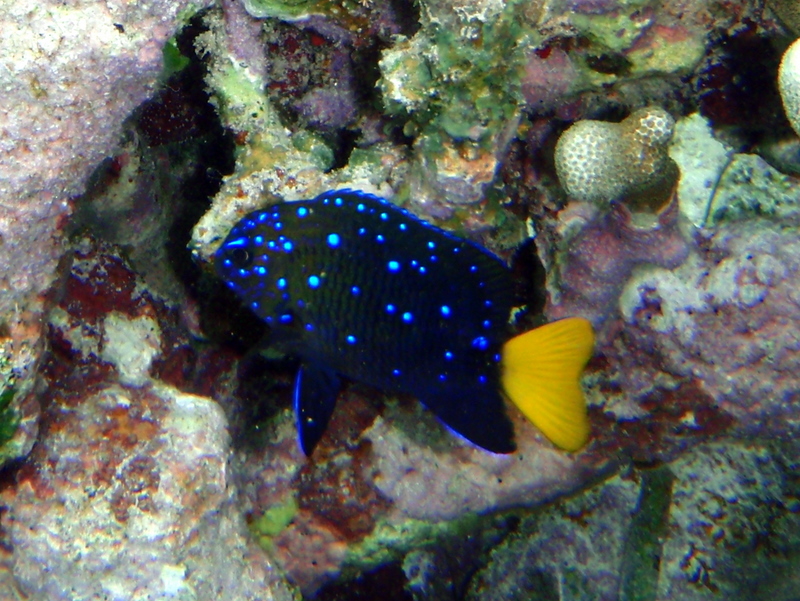
Mexico Rocks species list: cowfish, stoplight parrotfish, flounder, anemones (2 species), reef squid, queen angelfish, gray angelfish, blue-striped grunts, French grunts, sergeant major, southern sting ray, horseshoe ray, sponges (several species), flatworm, conch, blue tang, trumpetfish, christmas tree worm, flamingo tongue, yellow-tailed damsel, blue-headed wrasse, horse-eye jack, squirrel fish, slipper dick.
It took about an hour to motor back to our dock. At that point, the students had about 2.5 hours of free time, but many used that opportunity to update their journals. At 6:30, we gathered for dinner (every night is different, locally sourced, and traditional):
After dinner, we gather in the classroom to discuss the days events, identify species, formulate a plan for the next day, and discuss that night's assignment for the lab report. The students then break into their teams to work on their lab reports, consulting the well-stocked library of marine biology books available at TREC:
Everyone is working hard, learning a lot, and having fun. We look forward to doing it all again tomorrow!
Thanks for reading,
Prof. Eric J. Simon
A blog detailing Tropical Marine Biology, a course taught at New England College in Henniker, NH. The course ends with a ten-day trip to Belize. Our next trip is scheduled for January 3rd to the 12th, 2019.
Total Pageviews
Sunday, January 16, 2011
Saturday, January 15, 2011
Day 2 snorkeling
Day 2: Saturday January 15th, 2011
San Pedro and the waters around, Ambergris Caye, Belize
Click here to see an album of photos from today.
We all slept well last night, if a bit fitfully due to the colder-than-expected weather (the beds have no blankets, just sheets) and a fairly noisy neighborhood (lots of barking dogs). Everyone was awake in time for our 8:00 breakfast of fruit and french toast (with Aunt Jemima "maple" syrup - pretty shocking for this NH crowd!). We then gathered our equipment and walked five minutes to the beach with the boat dock:
Tough life, huh? While here, we are undertaking a small service project to clean the surrounding beaches, so everyone donned gloves and gamely took to that task.
Around 9:00, we walked down the dock to board our ship for the week, Goliath (a British-made catamaran):
As we headed to our first snorkel spot, Ken Mattes, Ph.D., Director of the Tropical Research and Education Center, gave us an orientation to the dive sites we would be visiting today:
We arrived at our first spot of the day, called Pillar Coral. Everyone was most anxious to get started, so they jumped right in and explored these unique coral formations:
Due to wind blowing from the north (an unusual situation in Belize), the waves were a bit high and rough, but everyone gamely carried on. We spotted much unique wildlife, such as this yellow spotted sting ray:
Pillar Coral species list: Elkhorn coral, brain coral, queen conch, slippery dick, pillar coral, flamingo tongue, spiny brittle star, blue tang, purple sea fan, donkey dung sea cucumber, yellowtail goat fish, bally ho, porcupinefish, trumpet fish, sargent major, squirrel eye fish, blue headed wrasse, french grunt, blue-striped grunt, black urchin, yellow spotted ray.
After about an hour of snorkeling, we lifted anchor and traveled to Tres Cocos, a site know for its diverse coral and marine life. We snorkeled for about an hour and identified many wonderful creatures, most of which the students were able to identify:
Tres Cocos species ID: elkhorn coral, brain coral, slippery dick, purple sea fan, trumpet fish, squirrel-eye fish, blue headed wrasse, sand dollar, yellowtail damselfish, staghorn coral, barracuda, peacock flounder, rock beauty, green moray eel, stoplight parrotfish, horse-eye jack, yellow goat fish, christmas tree worm, spotted eagle ray.
We had a light lunch on the boat (tuna sandwiches, water, and the traditional bean dip and chips that the crew prepares after each dive) and then headed to Tuffy, our research site for the week. Here, the students explored the reef to formulate ideas for the research project that will take up our lab time during the trip. We will be returning to Tuffy every day this week to complete our research, culminating in a lab report prepared by each student. We will be meeting tonight in the classroom to begin formulating hypotheses and the research methods that will test these hypotheses.
After returning from our dives, everyone had several hours to write in their journals, rest/relax, and explore the town. We'll have a 6:30 dinner and then classroom work and lab report writing tonight.
There were some purple hearts earned today for blisters from too-tight fins, sunburns, and coral scrapes -- all minor. The weather was a bit windy and colder than expected (high 60s) but warmed up by the end of the day (and far better than the current weather of 10 degrees in NH - so no complaining here!). All in all it was a great day and a great start to our week.
Thanks for reading!
San Pedro and the waters around, Ambergris Caye, Belize
Click here to see an album of photos from today.
We all slept well last night, if a bit fitfully due to the colder-than-expected weather (the beds have no blankets, just sheets) and a fairly noisy neighborhood (lots of barking dogs). Everyone was awake in time for our 8:00 breakfast of fruit and french toast (with Aunt Jemima "maple" syrup - pretty shocking for this NH crowd!). We then gathered our equipment and walked five minutes to the beach with the boat dock:
Tough life, huh? While here, we are undertaking a small service project to clean the surrounding beaches, so everyone donned gloves and gamely took to that task.
Around 9:00, we walked down the dock to board our ship for the week, Goliath (a British-made catamaran):
As we headed to our first snorkel spot, Ken Mattes, Ph.D., Director of the Tropical Research and Education Center, gave us an orientation to the dive sites we would be visiting today:
We arrived at our first spot of the day, called Pillar Coral. Everyone was most anxious to get started, so they jumped right in and explored these unique coral formations:
Due to wind blowing from the north (an unusual situation in Belize), the waves were a bit high and rough, but everyone gamely carried on. We spotted much unique wildlife, such as this yellow spotted sting ray:
Pillar Coral species list: Elkhorn coral, brain coral, queen conch, slippery dick, pillar coral, flamingo tongue, spiny brittle star, blue tang, purple sea fan, donkey dung sea cucumber, yellowtail goat fish, bally ho, porcupinefish, trumpet fish, sargent major, squirrel eye fish, blue headed wrasse, french grunt, blue-striped grunt, black urchin, yellow spotted ray.
After about an hour of snorkeling, we lifted anchor and traveled to Tres Cocos, a site know for its diverse coral and marine life. We snorkeled for about an hour and identified many wonderful creatures, most of which the students were able to identify:
Tres Cocos species ID: elkhorn coral, brain coral, slippery dick, purple sea fan, trumpet fish, squirrel-eye fish, blue headed wrasse, sand dollar, yellowtail damselfish, staghorn coral, barracuda, peacock flounder, rock beauty, green moray eel, stoplight parrotfish, horse-eye jack, yellow goat fish, christmas tree worm, spotted eagle ray.
We had a light lunch on the boat (tuna sandwiches, water, and the traditional bean dip and chips that the crew prepares after each dive) and then headed to Tuffy, our research site for the week. Here, the students explored the reef to formulate ideas for the research project that will take up our lab time during the trip. We will be returning to Tuffy every day this week to complete our research, culminating in a lab report prepared by each student. We will be meeting tonight in the classroom to begin formulating hypotheses and the research methods that will test these hypotheses.
After returning from our dives, everyone had several hours to write in their journals, rest/relax, and explore the town. We'll have a 6:30 dinner and then classroom work and lab report writing tonight.
There were some purple hearts earned today for blisters from too-tight fins, sunburns, and coral scrapes -- all minor. The weather was a bit windy and colder than expected (high 60s) but warmed up by the end of the day (and far better than the current weather of 10 degrees in NH - so no complaining here!). All in all it was a great day and a great start to our week.
Thanks for reading!
Friday, January 14, 2011
Day 1
Day 1: Friday January 14th, 2011
Tropical Research Education Center (TREC), San Pedro, Ambergris Caye, Belize
Click here to jump to the Picasa Web Album for the full set of photos.
An eventful day! We arrived in Belize on time, around 3:30PM local time. We deplaned, passed through immigration, cleared customs, checked into the local Maya Island Airline, passed back through security, loaded up, and then flew to San Pedro on Amergris Caye island off the northeastern coast of Belize. There were 18 of us traveling, which is, of course, way too many for one plane. So we split into three planes. 9 of us completely filled one plane.The flight was fairly epic, about 15 minutes with lovely views of the barrier reef:
The San Pedro airport wasn’t exactly Logan:
Our total travel time was about 13.5 hours, door to door. Not too bad. At the airport, we gathered all together, found our bags, and took 3 taxis to our home for the next 7 days, TREC:
We all broke out the snorkel equipment and tested it in the pool (as we were buzzed by bats) to make sure that everything was in working order:
We then gathered for a delicious localvore dinner of rice/beans, Marie Sharpe's hot sauce, and red-pepper-spiced chicken (and, for good measure, a Betty Crocker cake). We are currently sharing TREC with a group from Hofstra University, Long Island, NY. They depart tomorrow.
Tonight, we will write in our journals, have an orientation session from the TREC leader Ken, and prepare for tomorrow. I expect we’ll all sleep well tonight!
A few notes about this blog:
- If you'd like to get on an email distribution list to be notified when new posts are uploaded, please send me email
- Am I uploading too many photos? You can always see the full day's worth of photos in the Picasa web albums, so maybe I should only post a few here to make it load faster. Leave a Comment about what you think.
- You can always click on the link at the top of this blog to see where we are via real-time GPS
Thanks for reading! I hope to post an update at least once per day.
- ejs
And we're off!
(Note to self: Try to avoid ending every blog post title with an exclamation point!)
Greetings from Dallas / Ft. Worth International Airport. A bit early on our journey for a blog update, I agree, but I have no idea when we will next have reliable Internet access. So I figured I’d take this opportunity to let everyone know that we all departed successfully. We met at the Simon Center at 4AM. The setting was appropriate, about 8 degrees with snow piled high:
No one will be sad to trade that weather for the weather in Belize (currently: 72F). Thank you to Mark Mitch and Maria Colby of New England College for volunteering to be van drivers to/from Logan. We met some additional students there, checked all our bags, negotiated security (everything takes a long time when you have a group of 18!) and made it to our gate as boarding was underway. Our seats were scattered throughout the plane, but some were together:
After a 4.5 hour flight, we landed in Dallas. We have about an hour break before the 3 hour flight to Belize. We’re all very psyched to be off!
Hopefully I can update the blog soon from Belize, but I don’t actually know the Internet situation down there. Until then, thanks for reading and for supporting NECBelize!
Wednesday, January 12, 2011
Change in travel plans
I am happy to report that, after considerable effort, we were able to rebook our travel (on to a different carrier) so that we are leaving Boston on Friday morning and arriving in Belize Friday afternoon. We were thus able to restore two days of the trip! Our itinerary will change so that we will proceed with the entire island/snorkel/reef/laboratory portion of the course as originally planned, but entirely miss out on the inland/Mayan/ruins/caving part. Sorry about that, but it was the best we could do! And maybe it will entice some of you into a return visit...
On Tuesday night, we proceeded with the pre-trip dinner at my house, although attendance was down considerably since many people went home to the storm. Thanks to those who made it! It was a good pre-trip bonding experience:
Best,
Prof. Simon
On Tuesday night, we proceeded with the pre-trip dinner at my house, although attendance was down considerably since many people went home to the storm. Thanks to those who made it! It was a good pre-trip bonding experience:
Let the countdown begin again!
I ask you, somewhat rhetorically, where would you rather be this week?
Here in New Hampshire:
Or there, in Belize:
Best,
Prof. Simon
Tuesday, January 11, 2011
Ch..Ch..Ch..Changes!
Today's lesson: it doesn't matter how well you prepare, there are always forces greater than yourself. Despite 15 months of legwork, I find myself having to announce some majors changes to our trip.
First, Jim Newcomb has fallen ill and will not be able to attend. Luckily, we have another well qualified and enthusiastic instructor available in Deb Dunlop (second from right):
Jim will be missed, especially his knowledge of marine biology, but Deb brings a wealth of experience and a great knowledge of botany that will certainly come in handy. Feel better soon, Jim!
Second, the impending snowstorm has canceled our flight. And, despite great effort on my part, Delta cannot rebook our group to depart until Sunday morning. What a bummer! Between the large size of this storm and the large size of our group, it appears that an earlier departure is not possible. I am working on extending our stay in Belize an extra two days on the back end for those students who are available, so that is something.
I think our mantra for this trip will have to be "Roll with it!" I feel bad about the delay, but as I said at the top of this post, there are powers greater than ourselves at work!
Stay tuned for more updates as I have them...
ejs
First, Jim Newcomb has fallen ill and will not be able to attend. Luckily, we have another well qualified and enthusiastic instructor available in Deb Dunlop (second from right):
Jim will be missed, especially his knowledge of marine biology, but Deb brings a wealth of experience and a great knowledge of botany that will certainly come in handy. Feel better soon, Jim!
Second, the impending snowstorm has canceled our flight. And, despite great effort on my part, Delta cannot rebook our group to depart until Sunday morning. What a bummer! Between the large size of this storm and the large size of our group, it appears that an earlier departure is not possible. I am working on extending our stay in Belize an extra two days on the back end for those students who are available, so that is something.
I think our mantra for this trip will have to be "Roll with it!" I feel bad about the delay, but as I said at the top of this post, there are powers greater than ourselves at work!
Stay tuned for more updates as I have them...
ejs
Saturday, January 8, 2011
You can now track our location in Belize!
Greetings. In preparation for our trip, I've created a new page that allows you to track our location in Belize and see a trail of where we have been. Click on the banner link at the top of the page ("Click here to track our location") to be brought to the page that will show you our travel track so far. Keep tabs on us while we travel around Belize!
Subscribe to:
Posts (Atom)